Home DNA Testing

Home DNA Testing

News and insights in the world of DNA and genetics for paternity, immigration and forensics

Archive for the 'Siblingship' Category Grouped Archives

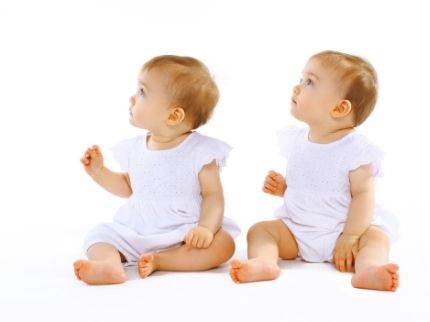
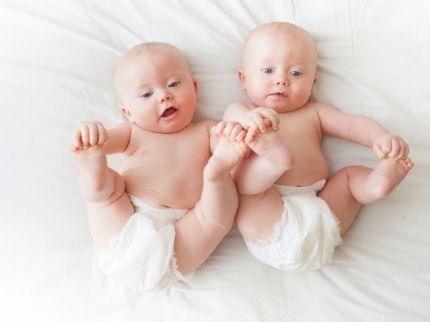
A new study failed to provide answers after pursuing a genetic explanation for why one identical twin developed multiple sclerosis while the other stayed healthy.  Researchers created complete genetic blueprints for a pair of  identical twins, looking for differences that might explain why one developed multiple sclerosis and the other did not. According to researchers there were no traces of a discrepancy in the twins’ DNA.  Scientists found no smoking gun when they compared amount of gene activity between the twin with multiple sclerosis and the twin without. The results appear in a study published on April 29 in Nature.

According to Stephen Kingsmore, a geneticist at the National Center for Genome Resources in Santa Fe, N.M., and leader of the new study, “We looked under a lot of rocks and we found no differences that we could replicate.” Kingsmore went on to say that the findings “points to some novel environmental trigger that must be very important to the disease. We don’t know what it is.”

This study was small; it examines only three pairs of identical twins and  one type of immune cell known to be involved in multiple sclerosis. A telling difference between sickness and health might be found in other types of cells, says Esteban Ballestar of the Bellvitge Biomedical Research Institute in Barcelona, Spain.  Ballestar went on to say, “They are closing a door here, but I think, perhaps, the door should be open.” Multiple sclerosis is a disease where the immune system attacks and damages the myelin sheath that helps speed electrical communication between nerves, this is the equivalent of scraping the coating away from an electrical wire. The damage results in pain and symptoms such as loss of coordination and vision.

In the study, Kingsmore and his colleagues determined the entire genetic makeup of the immune cells called T cells from the female twin who had developed multiple sclerosis at age 30 and from her twin who had remained healthy. It was important that the twins were now old enough that the healthy one is not likely to develop the disease.

Identical twins share the same genetic makeup (it is believed that they have identical DNA), and the researchers confirmed that both women carried variants of genes already known to increase the risk of getting multiple sclerosis. Scientists had thought that maybe the sick twin had developed an additional mutation in her DNA that finally triggered the disease. But the team found no such mutations.

I just came across an article distributed by the Slate discussing the above topic. This brought my thinking to the use of DNA and the idea of anonymity in general.

DNA testing makes them easy to trace
By Rachel Lehmann-Haupt Last Updated Monday, March 1, 2010, at 9:36 AM ET

When Donor 3066 signed up with the California Cryobank, he offered some basic information about himself on a piece of paper: that he had a BA in theater; that his mother was a nurse and his father was in the Baseball Hall of Fame; that his birthday was Sept. 18, 1968. He made it clear that he didn’t want to be found by signing a waiver of anonymity…

Donor 3066 was being sought out by Michelle Jorgenson, a 39-year-old waitress from Sacramento, Calif., whose daughter, Cheyenne, was born in 1998.  When her daughter turned 5, Jorgenson joined the Donor Sibling Registry and began searching for other mothers and donor offspring who used Donor 3066. She was concerned because her daughter was sensitive to sounds and walked on her toes, and she wanted to know if other half-siblings were displaying similar behavior. Through the registry, she met a number of other mothers and half-siblings. She discovered that two had autism and two others showed similar signs of sensory disorder…

Jorgenson began her search by approaching a mother in her group with a son named Joshua and suggested he do a cheek swab so she could explore his paternal roots through a Y chromosome test. The mother agreed. Through the test, Michelle learned about some of Joshua’s genetic markers. A few weeks of searching on the Family Tree DNA Web site using these markers led to two families with matching DNA. Through one of the families, she met a woman who mentioned that she found the obit of a relative who was a former baseball manager, and three children were listed. Michelle suspected that this might be her donor’s father, so she looked up the phone number of his listed son. When Michelle called the number, the deceased man’s son answered the phone. She began to ask him questions: Was your father in the Baseball Hall of Fame? Were you born in Illinois? Did you ever donate sperm? When the man said yes, she asked him if his birthday was Sept. 18, 1968. When he answered yes, she burst into tears. “You’re the biological father of my daughter,” she said. He was shocked but agreed to talk to Cheyenne on the phone—and eventually allowed the two to come visit him in Los Angeles.

Although in this case there appears to be a happy out come for all parties this is not always the case.  What about the request for privacy that Donor’s sign up for when they choose to remain anonymous?  Is that even something that clinic should offer since there is no guarantee that the donor can’t be found?  What are the options for men who do become donors?  There are many questions that are raised in this article and very few answers, partly because technology is growing at such a fast rate and party because it appears in the article many clinics are ignoring this issue of privacy.  Let us know what you think about this issue.

Paternity for many is a tough issue, both emotionally and legally. Paternity is assigned to men and boys in a few ways. The first is by marriage. Men are automatically assumed to be the father if they are married to the mother or in many states if they attempted to marry the mother and did not do so in a legal manner. The second is by voluntary acknowledgment. This is a typically a form that is signed in the hospital prior to the release of the mother and child. The third is by court judgment.

Most if not all states have a law that looks something like this:

(1) A man is presumed to be the father of a child if:

(a) He and the mother of the child are married to each other and the child is born during the marriage;

(b) He and the mother of the child were married to each other and the child is born within three hundred days after the marriage is terminated by death, annulment, dissolution of marriage, legal separation, or declaration of invalidity;

(c) Before the birth of the child, he and the mother of the child married each other in apparent compliance with law, even if the attempted marriage is, or could be, declared invalid and the child is born during the invalid marriage or within three hundred days after its termination by death, annulment, dissolution of marriage, legal separation, or declaration of invalidity; or

(d) After the birth of the child, he and the mother of the child have married each other in apparent compliance with law, whether or not the marriage is, or could be declared invalid, and he voluntarily asserted his paternity of the child, and:

(i) The assertion is in a record filed with the state registrar of vital statistics;

(ii) Agreed to be and is named as the child’s father on the child’s birth certificate; or

(iii) Promised in a record to support the child as his own.

(RCW 26.26.116 Presumption of paternity in context of marriage. on leg.wa.gov)

While this law might seem reasonable to many it does not take into account that it is estimated that 40% of wives will have an affair at some point in their marriage (www.caughthercheating.com) What if that child is not the husbands?

The second way is for the father and mother to sign Voluntary Acknowledgment of Paternity form at the hospital when you have your baby. The hospital staff will give you this form and help you complete it. When you and the child’s father sign the Voluntary Acknowledgment of Paternity form, the father’s name will be placed on the birth certificate.

If you and the baby’s father are unable to sign the Voluntary Acknowledgment of Paternity form at the hospital, you may complete it at home. Your signature must be witnessed by someone over 18 years old, and by a person not named on the voluntary acknowledgment.

You don’t have to be the biological father to sign this form there is no proof required you are stating you are the father and will be responsible the moment you sign this from. Most states but not all have laws that allow you to challenge paternity that is assigned based on the Voluntary Acknowledgment of Paternity. They typically have a set time period with in which you can contest your paternity.

The third way is to have paternity assigned to you by a court. This can happen if the alleged father does not responded to a woman’s claim for paternity or if the Judge or Jury feels that it is in the best interest of the child. For example a section of Missouri’s bill requires courts to balance the best interests of the child and the hardships of the man who is contesting paternity regardless of a DNA test proving that he is not the father.

“James McClendon knows he’s not the biological father of his ex-girlfriend’s 16-year-old son. He’s got a DNA test to prove it. But his wages are trimmed each month to pay thousands in child support debt. McClendon, who lives in St. Louis, has been fighting a 10-year legal battle to overturn a paternity ruling that says he’s the child’s father. Between legal bills, supporting his three biological children and several failed jobs, he’s built up $25,000 in child support debt.” (States move to allow DNA paternity challenges, By LEE LOGAN The Associated Press www.kansascity.com)

Stories like this are not all that uncommon unfortunately and have been a leading reason why in over 30 states laws are being or have been enacted to allow men to challenge paternity with a DNA test. A major force lobbying for changes to paternity laws is Carnell Smith, an engineer in Atlanta. Smith successfully lobbied for a Georgia law that allows men to challenge paternity at any time. Smith who calls himself a victim of “paternity fraud,” used this same law to erase his own paternity ruling in 2003. Carnell Smith has formed a national organization lobbing for similar laws in other states.

56 Years ago, two Oregon women, Kay Rene (Reed) Qualls and DeeAnn (Angell) Shafer, were born at Heppner’s Pioneer Memorial Hospital. While both girls were being bathed they were accidentally switched and returned to the wrong mothers.  The mistake was not discovered until the summer of 2008, when a former neighbor of the Angell family, and a friend of the Reed family, contacted Kay’s older brother, Bobby.

The 86 year old woman told Bobby that she “needed to get something offer her chest”.  She claimed Marjorie Angell, DeeAnn’s mom, had insisted she’d come home with the wrong baby – nurses had taken her baby and the Reed baby, both bald and weighing about 6 pounds, and bathed them together, when they returned with the babies, they’d been switched.

Both families compared stories and learned that rumors of the switch had been talked about for years.  They decided to preform a sibling-ship test to determine the truth as both sets of parents were deceased.  DeeAnn and Kay tested with two of Kay’s purported siblings and discovered that they had, in fact, been switched at birth!

It should comfort some to know that, while mistakes can happen, it is highly unlikely that this type of oversight could be made at a hospital in this day and age, as there are many precautions taken. Furthermore, should a mother have concerns, she is now able to do purchase and perform a maternity DNA test.

For the Full story:

http://eastoregonian.com/main.asp?SectionID=13&SubSectionID=48&ArticleID=92415

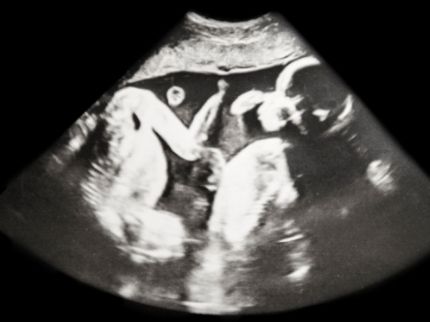
A Texas mother of twins discovers that they have two separate fathers. The mother, Mia Washington, cheated on her partner, James Harrison, with another man. One of her eggs was fertilized by James Harrison’s sperm and the second egg was fertilized by the other man, thereby causing fraternal twins with two separate fathers. (Identical twins occur when a single egg is fertilized by a single sperm and then, when it is a zygote, splits into two which creates a natural clone of it’s self. A DNA test to determine if twins are fraternal or identical is called a Twin Zygosity Test.)

In order for it this to occur, “The infidelity would have had to occur within a 24 to 48 hour period,” says Dr. Joseph Finkelstein, a Manhattan obstetrician and gynecologist. “Once the egg is released and is fertilized, the system shuts down, so although it technically could happen, it would have to happen in two days or less.” The likelihood of having twins without any medical intervention such as the use of fertility drugs is about 1 in 100, Finkelstein says.

“Texas woman gives birth to twins – from different fathers”
http://www.nydailynews.com/lifestyle/health/2009/05/18/2009-05-18_texas_woman.html#ixzz0G5OLyDcv&A

Written by Meagan Cantrell and based on an “Early Show Exclusive” interview video by Julie Chen dated 11/29/2007:

After 5 years of knowing each other, hometown best friends, Brandy Hersh and Heidi Wickware discovered they’re actually full sisters. Only two years apart in age, these two women, from Springfield, MO, attended the same elementary and middle schools, but became best friends when they stated dating two boys who introduced them to each other.

Although they have uncommon features, among them different eye and hair color, they were interested in, and liked to do, the same things and even finished each other’s sentences. The two became fast friends and were closer than the other longtime friends they had had for years. It was as if they had a special connection… and, in fact, they did!

As it turns out, biological mother, Lisa Russell, got pregnant by her boyfriend with Brandy in 1980. However, they weren’t married and Lisa couldn’t afford to take care of the baby, so she gave Brandy up for adoption. Not long afterward, she married that same man who first got her pregnant and had another child, Heidi, who, while growing up, had no idea that her mom had given birth to another child. However, from the time that she can remember, Brandy had always known that she was adopted. She figured that it really sunk in when she was six years old and her family adopted another child.

Brandy’s adoption was “closed”, so the two mothers never met, or actually knew each other, and had no real information about each other beyond generalities. Eventually, Brandy met her biological mother through Heidi. (They are carbon copies of each other on the video interview!) After Lisa found out Brandy’s birthday and at which hospital she was born, she admitted that she had given up a child for adoption. Heidi went to Brandy and said, “Mom mom gave a baby up for adoption and she thinks it’s you!” Brandy informed her adoptive mother, Debbie Visio, who had some clues as to who the birth mother was at the time. Debbie gave Brandy the only clues that she had about Lisa and it was a match!

After everyone put two and two together, Brandy tried to open up her adoption records. As it turned out, it was going to take years get to through the bureaucracy so the two girls decided to get DNA Sibling Test through Chromosomal Laboratories in Phoenix, AZ. Not too long afterwards they got the tests results back… a 99.999% match!

At the time of the interview the families had just received the results a few days prior. Although it seemed like the news was still sinking in, the sisters were overjoyed, thrilled and full of happy emotions… Best friends actually turned out to be sisters!

22 October 2007PARIS (AFP) – Thousands of people took to the streets across France Saturday to protest against a bill going through parliament that would bring in DNA testing for foreigners wishing to join their families here.

Organisers said some 3,000 people attended a march through Paris as part of a “national day of solidarity with foreigners”. Police put the figure at 1,500.

The protests, organised by immigration campaigners, leftist groups and rights organisations, drew between 500 and 1,000 people in Bordeaux and several hundred each in Marseille, Toulouse, Strasbourg, Nantes, Rennes and Dijon.

Among those marching in Paris was Arlette Laguiller, spokeswoman for the far-left Lutte Ouvriere party, who denounced the government of President Nicolas Sarkozy for “pandering to the far-right” with the immigration law.

Demonstrators held banners calling for illegal immigrants to have their status formalised and urging an end to deportations and to “genetic filing”.

Many employed immigrants were among the crowd. Ahmed, a 37-year-old removal man, complained that “we have been paying our taxes for years and we should be regarded by the government as other workers are”.

The immigration bill, which is expected to approved in parliament this week, has met fierce opposition from left-wing critics but also some members of the ruling right, as well as religious leaders and campaigning groups.

Supporters say the measure would make it possible for would-be immigrants to speed up the application process by proving their kinship to family members in France. They point out that 12 other EU countries carry out similar tests.

But opponents say the bill would set a dangerous precedent by making genetic affiliation a criterion for citizenship.

The government was forced to make a series of concessions to the proposed law to win over critics, including introducing the DNA tests only in countries where civil status documents proving kinship are often counterfeited.

AFP

Subject: French news

THE French Parliament yesterday adopted an immigration Bill that has sparked angry debate for introducing DNA testing of foreigners who want to join relatives in France.

President Nicolas Sarkozy has faced street protests and opposition even within his own camp over the Bill, which imposes new conditions for migrants to be reunited with their families.They include possible DNA tests to prove kinship.

The opposition Socialists voted unanimously against the Bill, saying it sets a dangerous precedent by resorting to genetics to determine who gets a place in France, instead of human rights principles.

However Immigration Minister Brice Hortefeux defended the Bill before the National Assembly, saying it had been “caricatured” and had fallen victim to “political tactics” instead of “disagreements on principle”.

Mr Hortefeux said 12 European countries already allowed DNA testing of immigration applicants.

France’s Socialist and Communist parties reaffirmed they would ask the Constitutional Council, the country’s highest legal authority, to strike down the Bill.

Hello, my name is Meagan Cantrell, welcome to my blog! I am the owner of DNA Identifiers of California which provides DNA testing services and products to organizations and the general public. You can visit my site from the link on the right side of the page.

Many of our clients ask interesting questions, which I track and compile in an effort to keep abreast of this ever-changing technology and it’s impact on our lives. I decided to start this blog in an effort to share that information, plus news and current events in the DNA and Genetics community. I hope you find my blog useful and informative. I’ll admit, I am excited to see how it turns out myself!

If you ever have anything to add, by all means, please jump in with two feet! And, of course, you are welcome to contact me directly with any questions or comments… or the need to purchase a DNA test!

Enjoy!