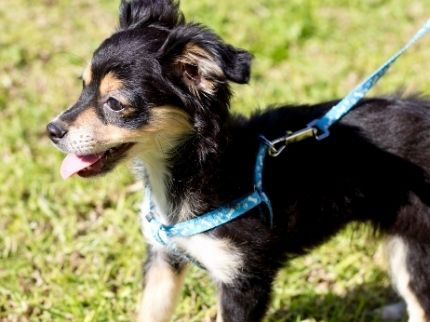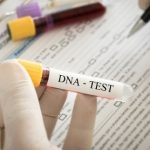
In an unusual case that spanned nearly a year, DNA sample were taken to prove that Molly belonged to Cliff and Darlene Ryckman.
Molly had no microchip and no tattoo, so when the tiny dog went missing last year the Ryckmans were at a loss to prove the identity of the dog they had raised from birth. Even though they found out who in the neighborhood had taken her in.
“I thought you know what, they do it on humans, they got to do it on animals,” when asked where shy got the idea to preform a DNA test on Molly.
The Ryckmans also own Molly’s sire, Howey, and had the DNA paternity test done In all three test were performed on each dog.
The stressful year started last March 4 when the two dogs were let out into the back yard of the family’s home. The gate wasn’t quite shut, and the two dogs started to chase a cat and the next thing Darlene knew, she couldn’t find Molly.
“I prayed every day,” she said. “I went to a psychic. I put it in The Spectator.” Darlene also put an announcement on local TV, got the word out at some schools and put up flyers.
Almost right after Molly went missing, a woman responded to the flyers Darlene had posted. She said had seen two people in the neighborhood pick up a Shih Tzu and take it into an apartment building. Cliff, tracked down a specific apartment, and was told by a woman there that they did not have Molly.
The Ryckmans weren’t convinced and they were persistent with police. Eventually they ended up face-to-face with the people who had picked up Molly on the street when they were out with Molly. Darlene said of the encounter, “Seeing Molly just walking away from me … she was going nuts when she seen me and my husband, and I just broke down because I couldn’t take my dog and these people wouldn’t give me my dog back.”
Cliff said the whole situation was very upsetting for the couple. He said,”It upset me to go to work because my wife would be crying everyday.”
But finally, after much determination and pursuing Molly through three moves by the people who had Molly, the Ryckmans paid $110 for DNA tests for the two dogs. Constable Annette Huys, one of two officers working on the case, took the DNA samples. Huys said, “I’d just come out of the forensic unit, so I was used to collecting lots of DNA, but not necessarily from dogs.” Huys said unfortunately everybody had fallen in love with the Molly and it didn’t matter which side police dealt with, they were always crying when it came to talking about the Molly.
It took about two weeks for the samples to come back a match. Molly was returned to her the Ryckmans on February 20th.
Staff Sergeant Jack Langhorn called the entire case including taking doggy DNA “extremely unusual.” He said, “It was a unique situation … It wouldn’t be something that we’re going to do on a regular basis.”
Darlene said she’s grateful to the two officers who worked on the case and that, she’ll be getting Molly microchiped shortly.
Mar 02
I just came across an article distributed by WebVet announcing the above topic. This brought my thinking to pets health in general.
By Claire Douglass for WebVet
Reviewed by Amy I. Attas, V.M.D.
All content on WebVet is reviewed annually by Vets to guarantee its timeliness and accuracy.
Article last reviewed – 8/1/2009
Some household cleaning products are loaded with chemicals, and can be harmful to your pet after prolonged exposure. Today, rates of canine cancer are increasing, following the same trend of rates of human cancers, which has caused researchers to look more closely at a shared environmental pathogenesis.
We are not immune to airborne toxins in the home. According to a 1992 U.S. Environmental Protection Agency publication “Targeting Indoor Air Pollution,” the air inside the typical home is an average of 2-5 times more polluted than the air outside, and in extreme cases, it can be up to 100 times more contaminated – largely because of household cleaners and pesticides.
According to the EPA more than 50 percent of indoor pollution is a direct result of household cleaning products. Pets and their owners are all vulnerable to the effects of perpetual exposure to the chemicals in these products. The risks that people face being exposed to cleaning products increases with duration of exposure. Stay at home or people who work at home have a reported 54 percent increased risk of cancer pets and companion animals are at even greater risk due to their faster metabolisms and smaller lungs. Pets process these chemicals at a faster rate and absorb more of these toxins into their bloodstreams as they breathe them in more rapidly.
According to the Morris Animal Foundation, an initiative to research and cure canine cancer that is endorsed by the Children’s Oncology Group, Animal Cancer Foundation, MIT/Harvard (Broad Institute), and the Mayo Clinic, one in four dogs will die of cancer. Cancer is the No. 1 cause of disease-related death in dogs over the age of two. The National Cancer Institute, the global leader in human cancer research, has included the study of cancer in dogs within its Comparative Oncology Program since 2003.
There are solution to this issue. There are many affordable lines of organic cleaning products available at most grocery stores, as well as countless books and articles on making one’s own effective household cleaners for far less than the cost of conventional cleaning products. I like apple vinegar mixed with water because it smells fresh and can be used on any surface as well as cutting through residue and lingering smells.
By using the numerous organic cleaning products now so readily available, or by saving money and easily making your own cleaning products, both pet and owner can breathe easier and live healthier lives.
Jan 21