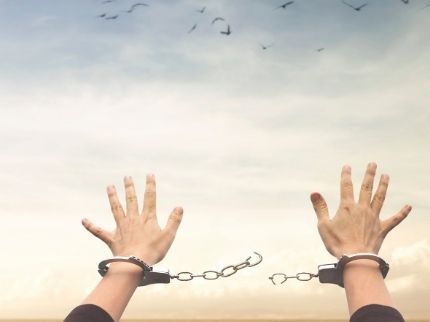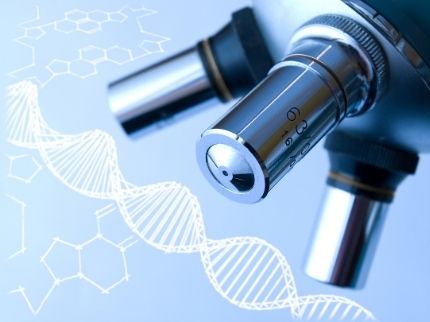
Another case of wrongful imprisonment, a man is exonerated 28 years later by DNA evidence with the help of The Georgia Innocence Project.
Oct. 4, 1978, Meriwether County, GA - An elderly rape victim was asked to pick out her assailant in a lineup and she chose the man in the middle, Jerome White. White was convicted and imprisoned based solely on eyewitness testimony, as have been most cases without hard evidence, historically speaking.
Yet, as state-of-the-art DNA evidence has recently proven, White was not her assailant, another man in the lineup was and his name is James Edward Parham. While White was imprisoned for 12 years, Parham went free… free to rape again, that is. (DNA testing was unavailable at the time of the Aug. 11, 1979, sexual assault in Meriwether County when White was prosecuted.)
As fate would have it, the guilty party, James Edward Parham, happened to be in that same jail on an unrelated arrest at the time of the lineup and was pulled from his cell along with other prisoners for witness ID. The victim had her assailant right in front of her and still did not choose the correct person! Perhaps this was because:
a) The victim, who was 74 years old at the time (now deceased), was asleep on her couch, in the dark, at 4am.
b) When Parham broke into her home, he raped and beat her so severely that her face was left partialy paralyzed.
c) Before he left the scene of the crime, he handed her a pillow and said, “Hold this to your face until I get out.”
d) The woman had prescription eyeglasses but she was not wearing them at the time.
According to an article by Bill Rankin:
On Sept. 28, 1979, the woman was shown a number of photographs, including White’s, and she said she was “almost positive” it was him. When she was presented the lineup of five men at the jail a week later, she said she was positive that White — not Parham standing just a few feet away — was the man who raped her.
“It was just a fluke [Parham] was put in the same lineup with Jerome White,” said Aimee Maxwell, director of the Georgia Innocence Project, which secured White’s exoneration. “This is a tragedy, on many levels.”
Rep. Stephanie Stuckey Benfield (D-Atlanta) told White she will support legislation to compensate him for the time he spent wrongly incarcerated.
Benefield released drafts of proposed legislation that says, beginning July 1, 2011, all photographic or physical lineups must be conducted by officers who have successfully completed eyewitness ID training. The legislation also says if a law enforcement agency does not have written protocols on eyewitness ID by Jan. 1, 2009, the agency can be denied state funding or state-administered federal funding.
Benefield said improved eyewitness ID procedures are necessary because there are only so many cases where DNA evidence can be used to identify the perpetrator.
The GBI supports improved eyewitness ID protocols, spokesman John Bankhead said Thursday. “Nobody in law enforcement wants to arrest the wrong person,” he said.
The accused, Jerome White, was defended at trial by the current U.S. Rep. Sanford Bishop (D-Ga.). White’ s laywer did not have him take the witness stand at his trial, however, when the jury found him guilty, he told the judge he didn’t do it. He states, “Then, when they put me back in the holding cell, I just cried,”.
In 2004, after receiving a letter from White, while he was in prison, The Georgia Innocence Project investigated the case. The Project eventually learned that hairs linking White to the crime, through microscopic analysis, were still on file at the Meriwether County Clerk’s Office. They pursued the case on behalf of White and evidence showed that this hair did not belong to him, but to Parham, whose DNA was already in a state database.
White, now released, is the seventh man in Georgia cleared by DNA evidence and has stated that he supports passage of new laws setting protocols for officers to follow when gathering eyewitness identification evidence.
The Atlanta Journal-Constitution
Published on: 12/13/07
http://www.ajc.com/metro/content/metro/stories/2007/12/13/eyewitness_1214_web.html
Dec 19
Photo/Eric Gay
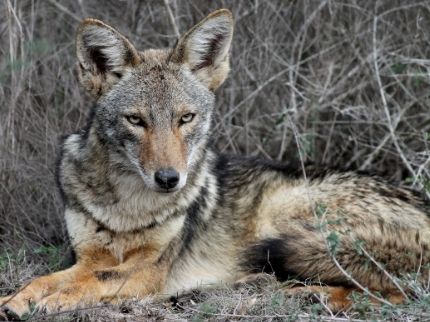
SAN MARCOS, Texas - The results are in: The ugly, big-eared animal found this summer in southern Texas is not the mythical, bloodsucking chupacabra. It’s just a plain old coyote.
Biologists at Texas State University announced Thursday night they had identified the hairless doglike creature.
KENS-TV of San Antonio provided a tissue sample from the animal for testing.
“The DNA sequence is a virtually identical match to DNA from the coyote,” biologist Mike Forstner said in a statement. “This is probably the answer a lot of folks thought might be the outcome. I, myself, really thought it was a domestic dog, but the Cuero Chupacabra is a Texas Coyote.”
Phylis Canion and some of her neighbors discovered the 40-pound bodies of three of the animals over four days in July outside her ranch in Cuero, 90 miles southeast of San Antonio.
Canion said she saved the head of the one she found so she could get to the bottom of its ancestry through DNA testing and then mount it for posterity.
Chupacabra means “goat sucker” in Spanish, and it is said to have originated in Puerto Rico and Mexico.
Additional skin samples have been taken to try to determine the cause of the animal’s hair loss, Forstner said.
Nov 02
I just came across an article distributed by the New Zealand Herald announcing the above topic. This brought my thinking to the use of DNA Profiling in general.
Dog Tags give way to DNA - 5:00AM Thursday November 01, 2007
CANBERRA - The DNA of all serving defence force personnel will from next year be stored to help identification of remains.
The Australian Defence Force decision follows a review of operating procedures and operational experience in Iraq and Afghanistan. Traditionally, soldiers have been identified by dog tags - discs inscribed with name, service number and religion - worn around the neck.
Although it sounds like a grim, possibly invasive, practice, using DNA in place of dog tags to identify the remains of soldiers is, in fact, very wise. Many different issues can arise with tags worn around the neck: they can be stolen, lost, destroyed, or held on to by another solider, to name a few.
The practice of DNA Profiling and Banking is elected by many companies that send employees or contractors to war zones. A sample of that person’s DNA is collected in the case of emergency. Should there be an incident, both the company and the family can have peace of mind. Quickly. So, why not utilize the same technology for soldiers who are on the front lines?
The same goes for cases involving human remains in public cases, such as in the search for a missing or abducted child, family members (parents, siblings or children) have to give a personal sample to be matched to remains found in the accident or murder. The amount of time between the incident/crime scene collection, family collection and laboratory screening for a match can be agonizing. Especially when using State and County Forensics labs which are notorious with delayed specimen processing. All of these issues, and more, have led some protective parents to have profiles performed on their children, “just in case”.
As a matter of fact, our company, DNA Identifiers, is arranging a collection at this very moment with a client who is traveling overseas in the coming year. The client is an American Soldier currently serving in the war and he has requested a Child ID Kit and DNA Profile… “just in case”. Understandably, he, of all people, has his concerns about his child’s safety and had decided to err on the side of caution.
Creating a U.S. database with solider DNA Profiles would help cut through the waiting and possible confusion with John Does’ and missing and destroyed dog tags. At the very least, the profiles could work in conjunction with the tags, not in place of. And it is conceivable that, not accounting for a backlog of cases, a lab could have the profile matched in a 24 hour period.
So why not use this technology the same as the Australians? Based on the number of times we have asked out Congress for an increase in funds and our militaries’ struggle to keep the troops properly armored, funding for this kind of project appears to be long way down the road.
For now, my advice to any soldier or family who feels the need to have peace of mind (like our client with daughter mentioned above) - don’t wait for the government to provide this service, have a private DNA Profile performed. I know it’s a relative matter, but they are not outlandishly expensive. If you ask, who knows, you might even get a discount!
For more information about DNA Profiling and Banking visit DNA Banking
(Please note that the above views of the author, and of DNA Identifiers, do not intend to lend support to, nor oppose, the War on Terror.)
Oct 31
The F.B.I. has been training police officers in other countries in Forensic Science.
According to an October 22, 2007 article on Bernama dot-com, The Malaysian National New Agency, beyond general forensics, courses in forensics crime scene management were also offered to Kuala Lumpurian and other Malaysian, police officers.
All of this training has been in anticipation of the passing of a draft bill…
“…aimed at establishing a DNA database has been formulated and will be submitted to the Attorney-General’s Department for approval.
Deputy Internal Security Minister Datuk Fu Ah Kiow said that once the green light was given, it would be tabled in the Dewan Rakat.
(The Dewan Rakat, which literally means “people’s hall”, is the House of Representatives in Parliament of Malaysia. - Wikipedia)
The database would enable all DNA samples to be stored and used to assist investigations or in court proceedings, he said when responding to Datuk Wan Junaidi Tuanku Jaafar (BN-Santubong).
Fu also said that foreigners accounted for only two per cent of crimes committed in the country.
‘But for violent crimes like murder and armed robbery, they accounted for between 16 and 18 per cent of the cases,’ he said. “
Oct 30
Hello, my name is Meagan Cantrell, welcome to my blog! I am the owner of DNA Identifiers of California which provides DNA testing services and products to organizations and the general public. You can visit my site from the link on the right side of the page.
Many of our clients ask interesting questions, which I track and compile in an effort to keep abreast of this ever-changing technology and it’s impact on our lives. I decided to start this blog in an effort to share that information, plus news and current events in the DNA and Genetics community. I hope you find my blog useful and informative. I’ll admit, I am excited to see how it turns out myself!
Enjoy!
Oct 20