Home DNA Testing

Home DNA Testing

News and insights in the world of DNA and genetics for paternity, immigration and forensics

Archive for the 'Animal Testing' Category Grouped Archives

South Korean scientists from Gyeongsang National University and Sunchon National University have cloned three Turkish Angora cats, born January and February, that glow red when exposed to ultraviolet rays and also glow in the dark. They did so by taking skin cells from a cat and inserting the fluorescent gene into them before transplanting the genetically modified cells into eggs. The purpose for doing this is so that these cats could help develop cures for human genetic diseases. The South Korean Science and Technology Ministry claims it was the first time cats with modified genes have been cloned.

Proving that this new technology works means other genes can also be inserted in the course of cloning, paving the way for producing lab cats with genetic diseases, including those of humans, to help develop new treatments.

According to veterinary professor Kong Il-keun of Gyeongsang National University:

“Cats have similar genes to those of humans,” “We can make genetically modified cats that can be used to develop new cures for genetic diseases.”

“People with genetic disorders usually have to receive treatment throughout their lives that is very hard on them,” Kato said.

“If these results can help to make their lives easier, then I think it’s a wonderful thing.”

Chupacabra Head and Owner/Finder

Photo/Eric Gay

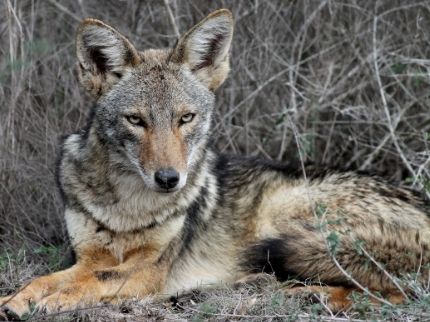
SAN MARCOS, Texas - The results are in: The ugly, big-eared animal found this summer in southern Texas is not the mythical, bloodsucking chupacabra. It’s just a plain old coyote.

Biologists at Texas State University announced Thursday night they had identified the hairless doglike creature.

KENS-TV of San Antonio provided a tissue sample from the animal for testing.

“The DNA sequence is a virtually identical match to DNA from the coyote,” biologist Mike Forstner said in a statement. “This is probably the answer a lot of folks thought might be the outcome. I, myself, really thought it was a domestic dog, but the Cuero Chupacabra is a Texas Coyote.”

Phylis Canion and some of her neighbors discovered the 40-pound bodies of three of the animals over four days in July outside her ranch in Cuero, 90 miles southeast of San Antonio.

Canion said she saved the head of the one she found so she could get to the bottom of its ancestry through DNA testing and then mount it for posterity.

Chupacabra means “goat sucker” in Spanish, and it is said to have originated in Puerto Rico and Mexico.

Additional skin samples have been taken to try to determine the cause of the animal’s hair loss, Forstner said.

By Malcolm Ritter, Associated Press
Cat
NEW YORK — An Abyssinian cat from Missouri, named Cinnamon, has just made scientific history. Researchers have largely decoded her DNA, a step that may aid the search for treatments for both feline and human diseases.The report adds cats to the roughly two dozen mammals whose DNA has been unraveled, a list that includes dogs, chimps, rats, mice, cows and of course, people.Why add cats? They get more than 200 diseases that resemble human illnesses, and knowing the details of their genetic makeup should help in the search for vaccines and treatments, researchers say. The list includes a cat version of AIDS, SARS, diabetes, retinal disease and spina bifida, said Stephen J. O’Brien of the National Cancer Institute.

The new work is reported in the November issue of the journal Genome Research by a team including O’Brien and colleague Joan Pontius. It covers about two-thirds of the DNA of Cinnamon, a research cat that lives at the University of Missouri in Columbia; more complete results are expected next year, O’Brien said.

Richard Gibbs of the Baylor College of Medicine in Houston, who led a team that decoded the DNA of a monkey called the rhesus macaque, called the new work “a good outline” of cat DNA. Scientists are looking forward to the complete version, which will be useful for making detailed comparisons to the DNA of other animals, he said.

The full complement of an organism’s DNA is called its genome. In cats, as in people, it’s made up of nearly 3 billion building blocks. The sequence of those blocks spells out the hereditary information, just as strings of letters spell out sentences. Decoding a genome, which is called sequencing, means identifying the order of the building blocks.

The new work identified 20,285 genes in the cat, probably about 95% of the animal’s full complement, O’Brien said. That’s similar to the 20,000-25,000 genes estimated for humans.

Hello, my name is Meagan Cantrell, welcome to my blog! I am the owner of DNA Identifiers of California which provides DNA testing services and products to organizations and the general public. You can visit my site from the link on the right side of the page.

Many of our clients ask interesting questions, which I track and compile in an effort to keep abreast of this ever-changing technology and it’s impact on our lives. I decided to start this blog in an effort to share that information, plus news and current events in the DNA and Genetics community. I hope you find my blog useful and informative. I’ll admit, I am excited to see how it turns out myself!

If you ever have anything to add, by all means, please jump in with two feet! And, of course, you are welcome to contact me directly with any questions or comments… or the need to purchase a DNA test!

Enjoy!