Autism is a brain development disorder and behaviors of those who have autism range from: hindered or impaired social interaction and communication; repetitive behavior such as hand-flapping, body rocking or head rolling; compulsive behavior such as arranging objects according to size, shape or color; the dislike of change; ritualistic behavior; self-injury; all starting before a child is three years old.
Up to this date, diagnosis has always been based on behavior - the child must exhibit at least six symptoms, such as lack of social or emotional reaction, repetitive use of language, problems with all types of communication and a fixation with objects. Autistic children may fail to respond to their name and often avoid eye contact with others. They have difficulty interpreting what people are thinking or feeling because they can’t understand social cues, such as tone of voice or facial expressions, and they don’t watch other people’s faces for clues about appropriate behavior. In a nutshell, they lack empathy.
Unfortunately, Autism is a common disease and effects approximately 1 in 150 births, according to the Centers for Disease Control and Prevention in 2007. This means as many as 1.5 million Americans today are believed to have some form of autism.
Based on statistics from the U.S. Department of Education, autism is growing at an alarming rate of 10-17 percent per year, and affects all races and ethnicities. At this rate, it is estimated that autism could affect 4 million Americans in the next decade! And although the overall incidence of autism is consistent around the globe, it is four times more prevalent in boys than in girls.
So how does Autism occur? What causes it to happen? This has been an ongoing debate for quite a long time.
According to Carolyn Abraham from the Globe and Mail (January 10, 2008):
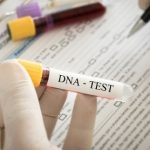
Two independent research teams have pinpointed the genetic glitch behind certain cases of autism, paving the way for the first DNA test to reliably predict who will develop the disorder.
Researchers with the Boston-based Autism Consortium have found that children who carry a missing or duplicated stretch of chromosome 16 have a 100-fold increased risk of developing autism. The mutation, confirmed through genetic scans of more than 1,400 people with autism in three separate study groups, appears most often to be the result of a random quirk not seen in either parent. Published in today’s New England Journal of Medicine, the Boston paper estimates the mutation is linked to about 1 per cent of all autism cases.
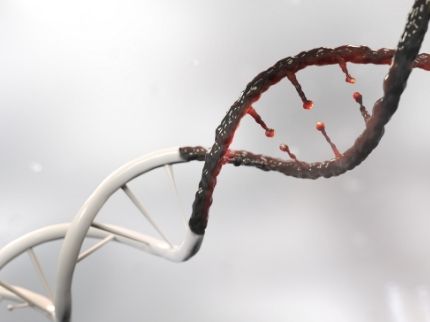
If the genetic code in this region is deleted - like a sentence missing several words - it cannot be read, said Dr. Scherer, and this seems to result in more severe cases of autism. If the code is duplicated, the disorder appears to be milder - like a sentence in which repeated words make it difficult, but not impossible, to read.
According to Dr. Scherer, “The link between the mutation and autism is so strong that it will herald “the first highly predictive DNA test for an autism disorder. We are transferring the technology [to perform the test] from our research lab to the diagnostic clinic as we speak.”
Interestingly enough, other types of mutations at Chromosome 16 have been identified as responsible for diseases such as: Crohn’s Disease; Inflammatory bowel disease, tuberous sclerosis, Charcot-Marie-Tooth disease, polycystic kidney disease and others. Now Autism can be added to it’s list.
As previously stated, in the past Doctors have relied on behavior to diagnose the disease. However, with this new technology, an inexpensive DNA test could identify those who are still in the womb, or infants who are suspected to have the disease. No doubt this pre-birth identification will generate either a positive, or negative, controversial reaction from people, depending on their beliefs.
Children’s Hospital in Boston is now also offering the test for the Chromosome 16 mutation for Autism.
For more information on the original article, please visit: http://www.theglobeandmail.com/servlet/story/RTGAM.20080110.wautismgta10/BNStory/specialScienceandHealth/home
Jan 10
South Korean scientists from Gyeongsang National University and Sunchon National University have cloned three Turkish Angora cats, born January and February, that glow red when exposed to ultraviolet rays and also glow in the dark. They did so by taking skin cells from a cat and inserting the fluorescent gene into them before transplanting the genetically modified cells into eggs. The purpose for doing this is so that these cats could help develop cures for human genetic diseases. The South Korean Science and Technology Ministry claims it was the first time cats with modified genes have been cloned.
Proving that this new technology works means other genes can also be inserted in the course of cloning, paving the way for producing lab cats with genetic diseases, including those of humans, to help develop new treatments.
According to veterinary professor Kong Il-keun of Gyeongsang National University:
“Cats have similar genes to those of humans,” “We can make genetically modified cats that can be used to develop new cures for genetic diseases.”
“People with genetic disorders usually have to receive treatment throughout their lives that is very hard on them,” Kato said.
“If these results can help to make their lives easier, then I think it’s a wonderful thing.”
Dec 19
Another case of wrongful imprisonment, a man is exonerated 28 years later by DNA evidence with the help of The Georgia Innocence Project.
Oct. 4, 1978, Meriwether County, GA - An elderly rape victim was asked to pick out her assailant in a lineup and she chose the man in the middle, Jerome White. White was convicted and imprisoned based solely on eyewitness testimony, as have been most cases without hard evidence, historically speaking.
Yet, as state-of-the-art DNA evidence has recently proven, White was not her assailant, another man in the lineup was and his name is James Edward Parham. While White was imprisoned for 12 years, Parham went free… free to rape again, that is. (DNA testing was unavailable at the time of the Aug. 11, 1979, sexual assault in Meriwether County when White was prosecuted.)
As fate would have it, the guilty party, James Edward Parham, happened to be in that same jail on an unrelated arrest at the time of the lineup and was pulled from his cell along with other prisoners for witness ID. The victim had her assailant right in front of her and still did not choose the correct person! Perhaps this was because:
a) The victim, who was 74 years old at the time (now deceased), was asleep on her couch, in the dark, at 4am.
b) When Parham broke into her home, he raped and beat her so severely that her face was left partialy paralyzed.
c) Before he left the scene of the crime, he handed her a pillow and said, “Hold this to your face until I get out.”
d) The woman had prescription eyeglasses but she was not wearing them at the time.
According to an article by Bill Rankin:
On Sept. 28, 1979, the woman was shown a number of photographs, including White’s, and she said she was “almost positive” it was him. When she was presented the lineup of five men at the jail a week later, she said she was positive that White — not Parham standing just a few feet away — was the man who raped her.
“It was just a fluke [Parham] was put in the same lineup with Jerome White,” said Aimee Maxwell, director of the Georgia Innocence Project, which secured White’s exoneration. “This is a tragedy, on many levels.”
Rep. Stephanie Stuckey Benfield (D-Atlanta) told White she will support legislation to compensate him for the time he spent wrongly incarcerated.
Benefield released drafts of proposed legislation that says, beginning July 1, 2011, all photographic or physical lineups must be conducted by officers who have successfully completed eyewitness ID training. The legislation also says if a law enforcement agency does not have written protocols on eyewitness ID by Jan. 1, 2009, the agency can be denied state funding or state-administered federal funding.
Benefield said improved eyewitness ID procedures are necessary because there are only so many cases where DNA evidence can be used to identify the perpetrator.
The GBI supports improved eyewitness ID protocols, spokesman John Bankhead said Thursday. “Nobody in law enforcement wants to arrest the wrong person,” he said.
The accused, Jerome White, was defended at trial by the current U.S. Rep. Sanford Bishop (D-Ga.). White’ s laywer did not have him take the witness stand at his trial, however, when the jury found him guilty, he told the judge he didn’t do it. He states, “Then, when they put me back in the holding cell, I just cried,”.
In 2004, after receiving a letter from White, while he was in prison, The Georgia Innocence Project investigated the case. The Project eventually learned that hairs linking White to the crime, through microscopic analysis, were still on file at the Meriwether County Clerk’s Office. They pursued the case on behalf of White and evidence showed that this hair did not belong to him, but to Parham, whose DNA was already in a state database.
White, now released, is the seventh man in Georgia cleared by DNA evidence and has stated that he supports passage of new laws setting protocols for officers to follow when gathering eyewitness identification evidence.
The Atlanta Journal-Constitution
Published on: 12/13/07
http://www.ajc.com/metro/content/metro/stories/2007/12/13/eyewitness_1214_web.html
Dec 19
Written by Meagan Cantrell and based on an “Early Show Exclusive” interview video by Julie Chen dated 11/29/2007:
After 5 years of knowing each other, hometown best friends, Brandy Hersh and Heidi Wickware discovered they’re actually full sisters. Only two years apart in age, these two women, from Springfield, MO, attended the same elementary and middle schools, but became best friends when they stated dating two boys who introduced them to each other.
Although they have uncommon features, among them different eye and hair color, they were interested in, and liked to do, the same things and even finished each other’s sentences. The two became fast friends and were closer than the other longtime friends they had had for years. It was as if they had a special connection… and, in fact, they did!
As it turns out, biological mother, Lisa Russell, got pregnant by her boyfriend with Brandy in 1980. However, they weren’t married and Lisa couldn’t afford to take care of the baby, so she gave Brandy up for adoption. Not long afterward, she married that same man who first got her pregnant and had another child, Heidi, who, while growing up, had no idea that her mom had given birth to another child. However, from the time that she can remember, Brandy had always known that she was adopted. She figured that it really sunk in when she was six years old and her family adopted another child.
Brandy’s adoption was “closed”, so the two mothers never met, or actually knew each other, and had no real information about each other beyond generalities. Eventually, Brandy met her biological mother through Heidi. (They are carbon copies of each other on the video interview!) After Lisa found out Brandy’s birthday and at which hospital she was born, she admitted that she had given up a child for adoption. Heidi went to Brandy and said, “Mom mom gave a baby up for adoption and she thinks it’s you!” Brandy informed her adoptive mother, Debbie Visio, who had some clues as to who the birth mother was at the time. Debbie gave Brandy the only clues that she had about Lisa and it was a match!
After everyone put two and two together, Brandy tried to open up her adoption records. As it turned out, it was going to take years get to through the bureaucracy so the two girls decided to get DNA Sibling Test through Chromosomal Laboratories in Phoenix, AZ. Not too long afterwards they got the tests results back… a 99.999% match!
At the time of the interview the families had just received the results a few days prior. Although it seemed like the news was still sinking in, the sisters were overjoyed, thrilled and full of happy emotions… Best friends actually turned out to be sisters!
Dec 03
WASHINGTON (Reuters) - DNA scraped from inside clay vessels show that a ship that sank off the coast of Greece 2,400 years ago was carrying a cargo of olive oil, oregano, and probably wine, researchers reported on Friday.The new research may offer a way to analyze the long-gone contents of hundreds of containers, said Brendan Foley of the Massachusetts Institute of Technology and the Woods Hole Oceanographic Institution.Writing in the Journal of Archeological Science, Foley and colleagues at Lund University in Sweden said they were able to get DNA sequences from the insides of two amphoras recovered in 230 feet of water in 2005.
The clay containers appeared empty, but the researchers decided to try testing for DNA anyhow. To their surprise, they got some — and not the DNA they were expecting.
The island of Chios where the shipwreck was found was well-known in the ancient world as a major exporter of highly prized wines. But the two amphora in fact carried DNA from olives and oregano.
They also found evidence of wine and perhaps pistachios, they said.
Foley hopes to use the technique to find out more details about the ancient shipping trade.
“Imagine if you were asked to analyze the American economy just by looking at the empty shells of 40-foot (12-metre) shipping containers,” he said in a statement.
“You could say something, but not much.”
Nov 08